Discovery, Insights, and Leadership
Introduction
Leadership theory is explored through personal insights drawn from experience of teamwork considering contingent and situational theories in different contexts. A background of observed and experienced leadership in domestic environments are contrasted with the situational and inclusive styles observed during the Everest challenge. The composite dynamics, preferences and resulting team culture is considered, with followership theories and critique of situational theory. The review concludes with an analysis of situational leadership and inclusive styles, drawing takeaways for organizational leadership roles.
Background
While working as a programmer in a team of games developers, over several years, our dedicated Technical Lead demonstrated behaviours of contingent management styles. With a domestic, coherent, and competent team, they used their authoritative position to ensure the team consistently delivered high quality code and industry standard experiences. Tasks were often complicated and complex requiring expertise in a particular domain, where he adopted a directional style insisting on incremental and iterative delivery (Northouse, 2021). During different phases of the projects, he would switch to a participative style. Working closely with the team to deliver systems at the expected standards, while sharing his concerns and engaging in discord about the aims and goals of the company (Roe, 2020). We were encouraged to be autonomous and take collective and individual responsibility for removing obstacles. Their supportive style was more compatible with earlier models of Path Goal Theory where the focus was on individual intrinsic and group extrinsic achievement rather than subordinate preferences (House 1971, 1996). The result was an exclusive culture of elites, where heroically achieving extremely challenging goals was celebrated.
Following a promotion to Technical Lead with the same group, I was tasked with leading the existing experienced team with the addition of a permanent junior and three graduate summer internship programmers. Having reviewed the works of Covey (2003) and Blanchard et al. (2011a, 2011b), I consciously attempted Situational Leadership. I initially directed the programmers to fix code bugs, to increase their competence and confidence. Gradually, I assigned them tasks with ever increasing complexity. Where they required support and when their task readiness was insufficient, I would revert to coaching. The increasing amounts of time and energy required resulted in my productivity decreasing, which concerned the other Technical Lead. My focus on increasing our production capacity proved to be the wrong decision when the summer internship programme, for reasons external to the project, was cancelled a month early. I learned that environmental constraints affect our ability to meet the needs of subordinates and we mustn’t neglect the needs of our superiors.
Everest Reflections
Followers
Our Everest team comprised of a group who each self-identified as having distinct nationalities spanning East/South Asia and the North Atlantic. The group appeared neurodiverse with a variety of preferences. Through observation of behaviours and interactions throughout, I categorised dynamics of the team using the Insights® Discovery (2013) model.
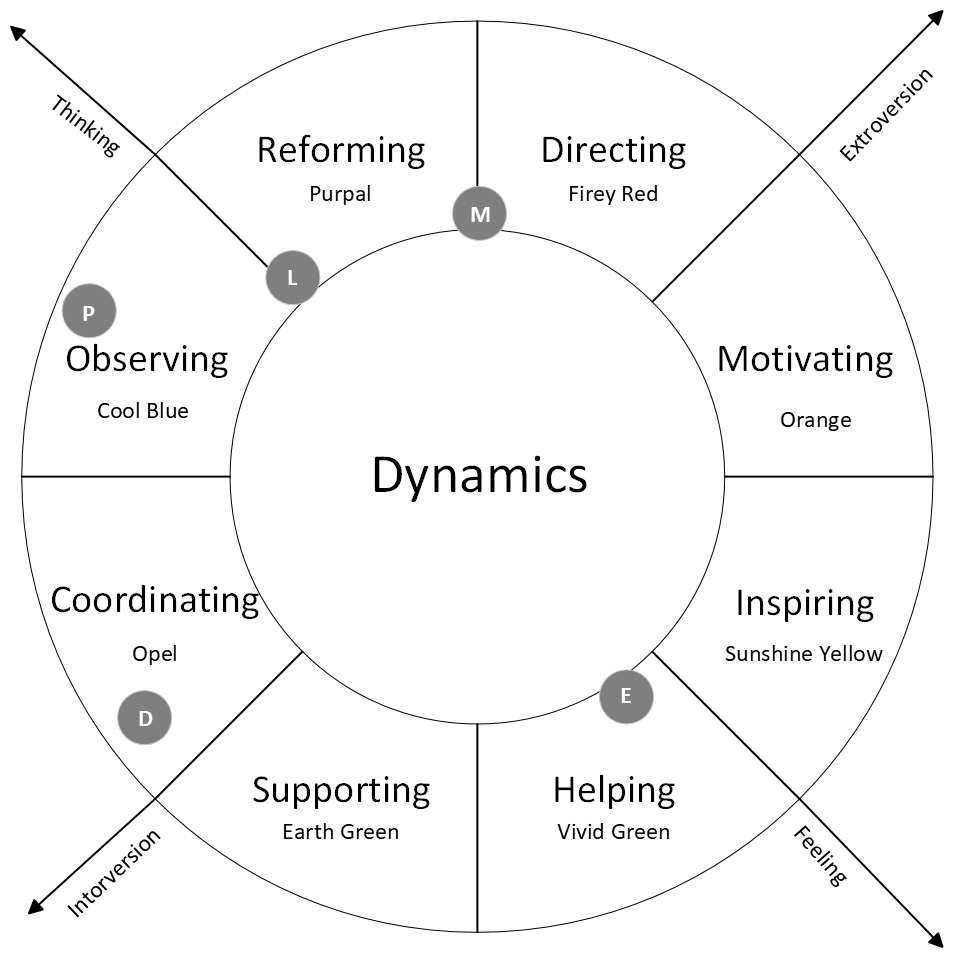 Fig 1. Team Dynamics (based on Insights® Discovery model, 2013)
Team culture was multinational, professional and competent, with no overt stereotypes, emotional or egotistical behaviours and the team was co-located at King’s College Aberdeen. The team was compliant in completing the challenge, manifest in the poster and presentation, and voluntarily accepted the legitimacy of the leader’s role. There were no material rewards nor coercion, the cooperative behaviour of the followers appeared reverent (Roe, 2020). Given the skew of preferences towards cooler hues, and other behaviours, I would attribute social rather than psychological motive for the reverent behaviour. The communication preference for the team was conversational, indirect, and free flowing as opposed to direct, terse closed questioning and answering. The team members with more of a thinking preference handled information as a scarce resource, often only sharing information when directed to do so. The information would be shared gradually and precisely. This appeared to be a communication preference rather than a positional power dynamic, given the other positive cooperative behaviour and the multinational composition of the group.
We see in Fig. 2 the followership of the team is mostly pragmatists with the Photographer and the Marathoner being less active than the Doctors and the Environmentalist.
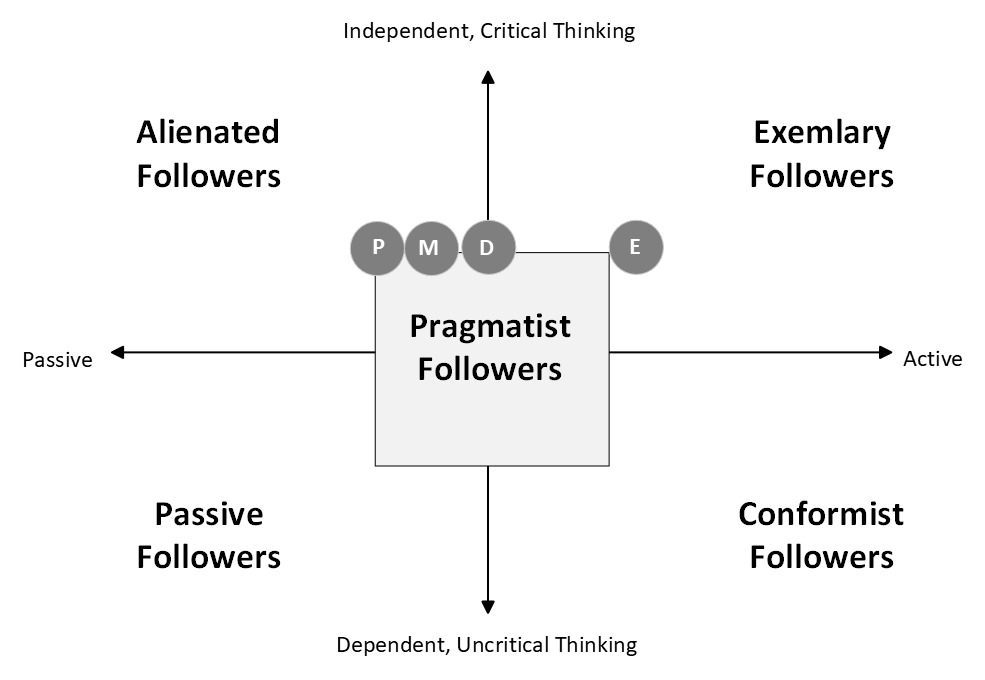 Fig 2. Followers adapted from Kelley (1992 cited in Northouse 2021)
Fig. 3 reflects that while mostly supportive, the Environmentalist challenged both the group and the leader’s decision to carry on during the practice climb, despite health concerns, and decided to travel back to base camp alone. The Photographer offered low challenge, low support and contributed least during the Everest poster task. The Marathoner contributed during all parts of the challenge and was least supportive of the leader, while the Doctors supported.
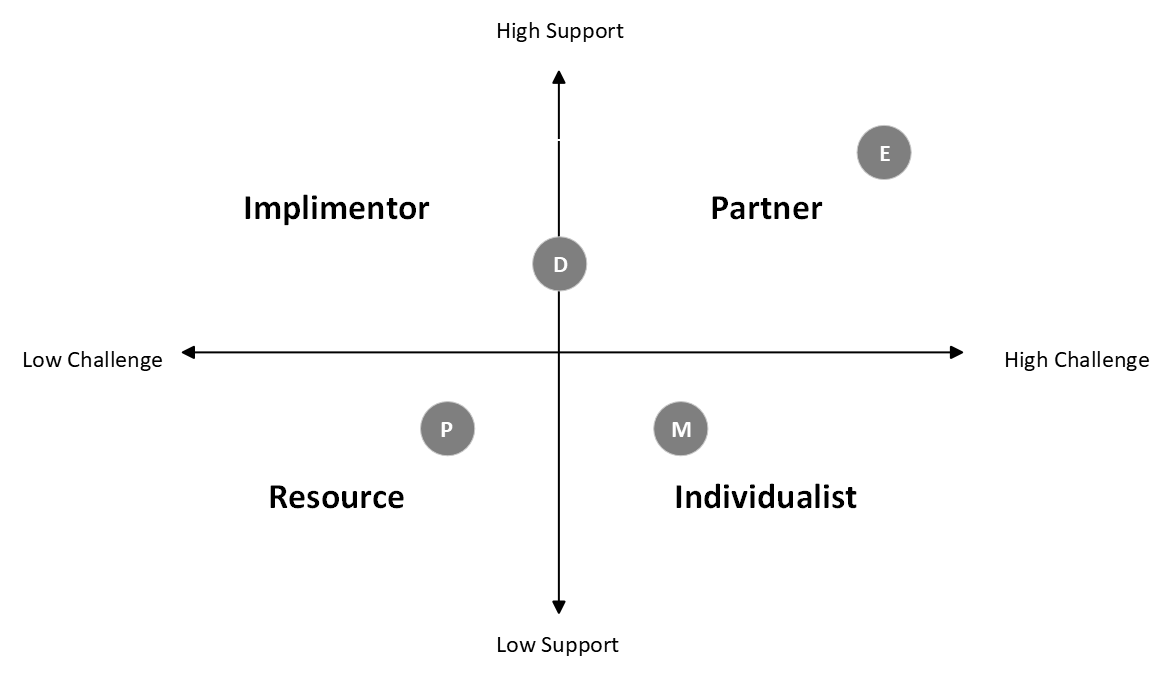 Fig 3. Followers adapted from Chaleff et al. (2008 cited in Northouse 2021)
The leader’s follower affect did not appear to change outcomes, although role modelling of professional, courteous behaviour and a focus on relationships was mirrored by the group. Reversing the lens, the pragmatic and compliant behaviours did appear to affect the quality of outcomes of task completion, running out the clock on the simulation, but did not affect the leader (Northouse, 2021). A significant attribution of the effectiveness of the team was the apparent commitment the team had to relationship building and networking with each other (Kelley, 1988).
Leader
The leader was an effective executive with people, conceptual and technical skills. True to their personality type (L in Fig. 1) they were disciplined, precise, deliberate, and formal. When making decisions they appeared level-headed and balanced. They were well socialised with a commitment to relationships and people.
The overall effectiveness of his leadership can be explained in terms of the followers, the tasks, and the leader behaviours (Reddin, 1977). Hersey and Blanchard’s (1996) Life Cycle Theory of leadership states that, contingent on the task and the follower, one of four styles should be adopted by the leader. Each of the styles represent each of the four combinations of low and high task and relationship focus: Directing, Coaching, Supporting and Delegating. The commitment and competence of the followers determines the appropriate style. The leader mostly demonstrated the high relationship and low task Supporting style. This is compatible with the followers being competent and compliant (Northouse, 2021). The Everest tasks were well structured puzzles which seemed to depend on varied and conflicting information distributed amongst the team requiring unconventional methods. The qualitative and subjective nature of the tasks required an information assurance process, and the information fuzzing at altitude seemed to cause some cognitive dissonance for followers with thinking and sensing preferences. This resulted in lower confidence and readiness to complete the tasks, which rationalises the supporting and low directive approach during the tasks. The coaching methods of the leader were providing time, and his attention to discussing the tasks the followers were completing and facilitating contributions of information and opinion of the other followers. This is in contrast to the Everest poster challenge, which was a structured known quantity, where the leader adopted a delegating style. Fiedler (1967) seems to support that maintaining good leader member relations when task structure and positional power is reasonable that outcomes will be favourable. However, the advocation of swapping the leader over having a leader swap styles, seems to be fundamentally different to other contingent and situational models (House 1996; Hersey & Blanchard 1996).
Unlike Hersey and Blanchard’s (1996) Life Cycle Theory, Path Goal Theory (House 1996) suggests that leadership behaviours can be used to affect follower motivation, depending on their characteristics and the nature of the task. The Leadership behaviours are Directive, Supportive, Participative and Achievement-Oriented. While the directive and supportive styles are similar, it would suggest that a directive style would have been appropriate for some of the followers during the Everest tasks, whereas others would have been better motivated by the supportive style given, because of the differences in the follower’s desires for control. A further superficial similarity is follower preferences for structure and follower self-perceived level of task ability. It is more comprehensive than Life Cycle theory, in that it not only considers the development levels of the followers, but also considers the dynamics of the followers (Northouse, 2021). While Path Goal theory has sufficient depth and simplicity to be useful and have a broad range of applications, such as computer games programming, arguably it isn’t appropriate for the Everest tasks. The tasks were binary, in the same way as answering questions on a quiz show, so effort did not necessarily lead to accomplishment. There wasn’t any material intrinsic, or expectation of, reward for task accomplishment, performance, or behaviour (House 1996).
The leader demonstrated behaviours of inclusive leadership by actively soliciting input from and consulting with all members of the team at various points during the challenge. Northouse (2021) describes inclusive leadership as a form of relational leadership, where, through leader-follower interactions, mutual influences are manifest. An example of this social inclusion was organising a team lunch with the entire group participating, mitigating the formation of out-groups and confirming the status of all individuals as members of the in-group. While there were noticeable observations of how the leader influenced and behaved towards the group, the extent to which the group influenced the leader wasn’t immediately apparent. When viewed through the lens of an effective team building and socially pleasant experience, the leader and the followers can be said to be high performing achievers, who had fun!
References
- Blanchard, K. and Johnson, S. (2011a) The One Minute Manager. London: HarperCollins.
- Blanchard, K., Oncken, W., and Burrows, H. (2011b) The One Minute Manager Meets the Monkey. London: HarperCollins.
- Covey, S. R. (2003) The 7 Habits of Highly Effective People. Audiobook ed. Unabridged. New York: Simon and Schuster.
- Fiedler, F. E. (1967) A Theory of Leadership Effectiveness. New York: McGraw-Hill.
- Hersey, P. and Blanchard, K. (1996) “Great ideas revisited: Life-cycle theory of leadership”. Training & Development, 50(1), pp. 42-47.
- House, R. J. (1971) “A Path Goal Theory of Leader Effectiveness”. Administrative Science Quarterly, 16(3), pp. 321–339.
- House, R. J. (1996) “Path-goal theory of leadership: Lessons, legacy, and a reformulated theory”. The Leadership Quarterly, 7(3), pp. 323-352.
- Insights Group (2013) “Insights® Discovery”. (Accessed: 6 February 2024).
- Kelley, R. E. (1988) “In Praise of Followers”. Harvard Business Review, 66(6), pp. 142-148. (Accessed: 11 February 2024).
- Northouse, P. G. (2021) Leadership: Theory and Practice. 9th ed. California: Sage Publications.
- Reddin, W. J. (1977) “An Integration of Leader-Behavior Typologies”. Group & Organization Studies, 2(3), pp. 282-295.
- Roe, K. (2020) Leadership: Practice and Perspectives. 3rd ed. Oxford: Oxford University Press.